
Reflections on Gratitude

 Gratitude combines the awareness of unbidden blessings in our lives (gratefulness) with the ability to articulate this awareness to ourselves and to others (thanksgiving, with a lower-case "t"). In my own life, I have been uncommonly blessed to be born in a strong, loving family; to have had a great education; to have found my vocational calling; and to have had the opportunity to share my passions with others who care about them. It doesn't get much better than that.

Most often, gratitude is seen as a virtue because of its connection to generosity--an outward display of this inward "feeling". As I reflect more deeply, however, perhaps the most significant impact of an "attitude of gratitude" is in how it changes the one experiencing it.

To realize a moment of the sheer beauty in a November sunset, or to receive the unqualified forgiveness of someone you've unintentionally hurt, or to experience the joy of seeing someplace entirely new--these change the lens trough which we see the world, how we interact with others, and how we see ourselves in relation to others. In short, it changes for the better how we experience this world.

This is the true gift of Thanksgiving (with a capital "T" this time). Gratitude is a gift that can keep on giving to each of us all year long.

November is National Caregivers Month

 November is a month of gratitude.  We celebrate Thanksgiving Day and express our appreciation for the good things in our life.  What better time to say an extra “thanks” to the caregivers in our lives?

According to the National Caregivers Association, over 65 million Americans – approximately 29% of the U.S. population – provide care for chronically ill, disabled or aged family members or friends during any given year.  Family caregivers provide an average of 20 hours of care per week.  Over 66% of these caregivers are women, and 37% also have children or grandchildren under the age of 18 living with them.  What, you might ask, does this have to do with financial planning?

The reality is that the value of the services provided by family caregivers in the U.S. is estimated to be upwards of $375 billion each year.  Most of these caregivers receive little to no compensation for the services they provide.  Providing caregiver services to friends and family can create a drain on family funds, as these caregivers must often leave their jobs or significantly reduce their hours.  This, in turn, drains savings and delays retirements.

Action steps can be taken to protect the financial well-being of these valuable caregivers:

  • Have a family plan in place for providing care.  My recent blog on holding a family meeting is a good guide for starting this conversation. 
  • Coordinate family resources.  This involves sharing responsibilities among family members (even those living at a distance) so that no one member is overburdened.
  • Put financial resources in place to cover potential long term care expenses.  This includes purchasing long-term care insurance or alternative self-funding strategies so that care can be paid for (this includes providing possible compensation for family caregivers).

One of the best ways to say “thank you” to current or future caregivers in your life is to plan.  Contact your financial planner to provide assistance with family meetings, coordination of resources, or long-term care funding.


The information has been obtained from sources considered to be reliable, but we do not guarantee that the foregoing material is accurate or complete.  Any opinions are those of Center for Financial Planning, Inc., and not necessarily of RJFS or Raymond James.

Memories of Thanksgivings Past

 When I was a young child, my father liked to hunt small game.  There were a few Thanksgivings when we had rabbit.  We never saw the rabbit until it came to the table and it tasted like chicken to us.  He not only enjoyed the hunting but also liked the idea of being self-sufficient.  My mother was a city gal and dad understood the rules. The game was to be ready for the pot before she saw it, looking just like it came from Kroger.

One year dad decided to raise a turkey in our basement intended for Thanksgiving dinner.  He was smart enough not to let us name the bird.  We simply called it “turkeyboy”. My sister and I fed and watched “turkeyboy” grow to be a nice fat bird.  The big day came and dad brought the bird upstairs ready for the oven. A few hours later, we all sat down for the big feast.  My mother ceremoniously brought the turkey to the table for carving.

The only one who ate turkey that Thanksgiving was dad. My sister and I ages 4 and six sat there and cried.

Years later, while living on the Connecticut sea coast town of Mystic, Ron and I decided to have lobster for Thanksgiving dinner as a treat for visiting Grandma Gunther.  Ron let the lobsters crawl around the kitchen floor before throwing them into the pot.

The only one who ate lobster that Thanksgiving was Ron.  Our two little girls sat there and cried. 

Some lessons are never learned!

The Seasons of the Markets

 One of the Center’s Core investment beliefs is in “Market Cycles and Risk”. Before I explain our approach, I think it’s essential to remember that just about everything is cyclical.  There’s little I’m certain of but I do know this: Nothing goes in one direction forever.  Trees don’t grow to the sky. And there are few things as dangerous for investor health as insistence on extrapolating today’s events in the future.
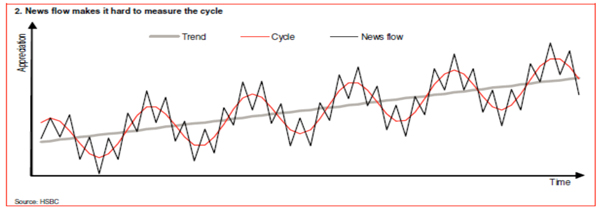
(Above is a sample chart of cycles with a discernible trend over time)

Our lives are full of different types of cycles.  There are those that occur naturally, like the cycle of life and those cycles that are biologically driven. There are also manmade cycles like the presidential cycle and the workweek cycle.  Ever wonder where we are in the current economic cycle or market cycle? Economic and market cycles are not quite as spherical, but they have different seasons and they do typically rotate in a circular fashion over time.

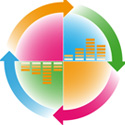
Below is a graph of the market cycle. The Pink/Purple is the fall at the top is fall, the Red is winter and the capitulation and bottoming process, Green represents the spring a thawing out of a new bull market, and Blue is the summer representing the bull market.  Luckily, in the seasons of the market, summer is usually 2-3 times longer than winter, same with contraction and expansionary periods in the economy.  

Very few people can consistently pick bottoms of markets within months and even fewer can pick market tops with any accuracy. Some of the best investment strategists make predictions that are years off the mark. But understanding the season is something that we try to do at the Center.  In our approach, we attempt to manage the exposure to equities during the late fall and early winter as some inevitable downturns can get very difficult for investors.  However, we also attempt to get back to normal allocations in the late winter and early spring.  We call this rebalancing and tactical asset allocation of a portfolio.  Adding to underweighted asset classes can be emotionally difficult for most investors to do during the winter and spring season when it seems like things in the world are falling apart. 

Most people would guess that we are currently in the summer or fall of the current economic cycle.  That’s when investors are comfortable, more at ease with a sense of relief and even optimism and excitement can prevail.  However, this cycle will end and again we will find ourselves with a different season where markets are uncomfortable and statements are not as cheery.   Another winter will be looking us in the face again.   Try to remember what was going on both internally (your stomach) and externally (the newspaper, fundamentals and technical indicators) in the last trough and it can help with the next one.  Because it’s in the winter that opportunity exists, you just have to remember it doesn’t always feel like opportunity. 


The information contained in this report does not purport to be a complete description of the securities, markets or developments referred to in this material.  The information has been obtained from sources considered to be reliable, but we do not guarantee that the foregoing material is accurate or complete.  Any information is not a complete summary or statement of all available data necessary for making an investment decision and does not constitute a recommendation.  Any opinions are those of Center for Financial Planning and not necessarily those of RJFS or Raymond James.  Investing involves risk and investors may incur a profit or a loss.  Past performance may not be indicative of future results.

Heard Around the Thanksgiving Day Table


 Thanksgiving Day Traditions

Thanksgiving day memories make me smile in gratitude for all of the blessings I have in my life.  The tradition of gathering together to share a meal, stories, laughter, love and the good natured rivalry over football games seemingly coming to life out of the TV are all part of the experience. 

Every year when mom says, “Time to eat!” we all know what comes next . . . . . you can see the pride and joy in mom’s eyes when she asks all of us to hold hands around the table so she can take it all in and say out loud how much it means to share the day together. Laurie Renchik 

I am thankful for adoption and marriage!  I’m living my happily ever after with the three loves of my life. Kimberly Wyman

Thanksgiving frames family memories from times gone by and challenges me to make the lasting special memories for my family today.  I think of North Texas Novembers and large family gatherings as I was growing up. There was the annual family picture on my grandmother’s front porch, sneaking a seat at the adult table (always closest to the mashed potatoes), syrupy, delicious pecan pie, and always Dallas Cowboys Football after a big meal.

This year, the Detroit Lions will take priority over the Cowboys.  My scenery has changed from dusty open Texas ranges to a quaint northern Michigan village sharing the day with my husband and our family. I will always be grateful for the special memories that keep me close to family near and far, here and gone, and savor the opportunity to continue to experience priceless moments entwined with a truly American holiday. Melissa Joy

I am thankful for both of my families…my personal family and my Center family.  I cannot imagine being able to do the work that I love or being able to pursue my passion for financial gerontology without the support of both of my families. I am thankful for and truly cherish my relationships with my husband, children and parents, as well as my co-workers and clients.  I wish everyone a Happy Thanksgiving! Sandy Adams

Year End Tax Planning: Capital Gains -- Good or Bad?

 The holiday season is the perfect antidote to the sadness of yet another beautiful fall ending.  Once the last leaves have fallen off of the trees and the smell of them burning in our fire pits has wafted away, it is promptly replaced with good food, family and the smell of something baking in my oven.  The holiday season is an exciting time of the year with many of us frantically buying Christmas presents, and some even planning New Year’s celebrations.   However, in the middle of the holiday hustle and bustle, it is important to stop and put your taxpayer hat on.

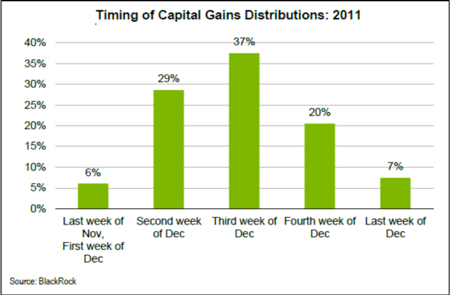
Typically from mid-November to the end of the year investment companies must pay out their capital gains distributions.  As you can see from the chart below, the majority of firms tend to distribute in December.

If you own mutual funds in a taxable account and the distributions are anticipated to be large, you should weigh the advantages and disadvantages of owning the investment and incurring the capital gain.  By incurring the capital gain you are increasing your basis in the investment.  This year is a unique year with the complications of the fiscal cliff.  It may be a good time to incur those gains this year to have fewer in coming years!   You will want to consult with your tax advisor and financial planner to determine this for yourself.

Many companies will release estimates in October and November as a service to their shareholders, but not all do.  You can typically find these by checking the company’s website.  So take some time out from all the shopping mall traffic this holiday season and talk to your financial planner today!


The information has been obtained from sources considered to be reliable, but we do not guarantee that the foregoing material is accurate or complete.  Any information is not a complete summary or statement of all available data necessary for making an investment decision and does not constitute a recommendation.  Any opinions are those of Center for Financial Planning, Inc., and not necessarily those of RJFS or Raymond James.

Year End Retirement Savings: From 401ks to IRAs

 It should come as no surprise that saving for retirement is a financial priority that takes discipline, diligence and oversight. One important year-end financial move to help keep your retirement savings in check is to review your contributions to 401k plans and IRA’s for the year.

If you received a year-end bonus, you may want to go ahead put some of it into your retirement to max out your contributions for the year (see our post on year-end planning for your bonus).  Likewise, if you’ve received a raise, can you increase your regular contributions? 

Year-End Tips for 401k Participants:

    ✔ Max out 401k contributions if cash flow permits. For 2012 the limit is $17,000 and if you are over age 50 you can contribute an extra $5500 per year.  To calculate your maximum percentage divide $17,000 by your annual salary.

    ✔ Review your employer match policy to make sure you are not leaving money on the table.

    ✔ Plan for 2013.  The maximum contribution amount for 2013 is $17,500; an increase of $500 from 2012.

    ✔ If you have left an employer and have an old 401k sitting around, you may want to consider rolling over to an IRA.

Year-End Tips for IRA Owners:

    ✔ The 2012 maximum contribution amount for IRA’s is $5000. 

    ✔ Don’t forget about the “Catch-up” contribution if you are 50 or older.  That’s an extra $1000 you can contribute for a total of $6000. (Note:  Total combined contributions to Roth and/or traditional IRA’s cannot exceed these amounts)

    ✔ Do you have multiple IRA accounts?  Consider combining them to simplify record keeping and management. 

    ✔ SEP-IRA:  Maximum contribution limits for self-employed and small business owners is 25% of salary or $50,000; whichever is smaller.

    ✔ Plan for 2013.  The IRA contribution limit is $5500 and the SEP-IRA limit is 25% or $55,000; whichever is smaller

So, before you bid farewell to 2012, spend some time with these checklists. Your future is worth the time it takes to properly plan today. If you need help, we’re always ready with answers.


Any information is not a complete summary or statement of all available data necessary for making an investment decision and does not constitute a recommendation.  The information has been obtained from sources considered to be reliable, but we do not guarantee that the foregoing material is accurate or complete.

Sandy Adams Attends Inaugural Alzheimer's Conference

 Sandy Adams, CFP® represented the Center as a sponsor of the first annual Alzheimer’s conference on November 1, 2012.  The conference, a collaborative conference put on by the Alzheimer’s Association Greater Michigan Chapter and the Wayne State University Institute of Gerontology, was put on for an audience of health care professionals and caregivers. 

This year’s conference, entitled “A Meaningful Life with Alzheimer’s Disease” brought highly recognized speakers to discuss issues such as person centered care, financial capacity and vulnerability and pain management. Well over 200 participants attended the first annual conference.  Sandy has been invited to be a part of the planning committee for the 2013 conference.