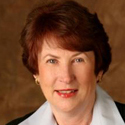
Join us in welcoming Matt Trujillo

 
There is a new face around our office and it belongs to Matt Trujillo. He’s one of our two new Support Advisors who will be working directly with our financial planners and our clients. The focus of the Support Advisor position and Matt’s new role is to assist our lead planners in providing an even deeper level of service to clients. Managing Partner Tim Wyman adds perspective.

Matt is uniquely qualified for this role and has hit the ground running. We are excited to have both Matt and Nick join the firm - two quality people who espouse our firm and service values.

Matt has almost six years of experience in the financial sector. When he’s not here at the Center, you might find him playing with his son, fishing or playing and teaching chess. He’s lived in Michigan for the past 18 years, but originally hails from Denver, Colorado.

When asked why our team felt like the right fit for him, Matt said, “I think of the Center as a family of advisors helping families of the community meet their financial goals.” Welcome to our growing family Matt!

College Savings 101: The 529 Plan

 It doesn’t quite seem possible, but yet another summer is quickly coming to an end and before you blink, the leaves will have changed and Christmas products will be on the shelves.  Very soon, school will be back in session and those who are of college age will begin the seemingly daunting task of getting their ducks in a row before another semester begins.  Deep sigh……

One of the top priorities on that list for parents should be to consider using a 529 account for college savings.   529 plans are tax-deferred accounts (like an IRA) that are an excellent way to save and invest for various higher educational expenses. 

Features:

  • Potential state tax deduction on contributions up to certain annual limits
  • Tax deferred growth potential
  • No taxation upon withdrawal if funds are used for qualified educational expenses (such as tuition, books, certain room and board, computers, etc.)
  • The owner, generally the parents have control over the account and can transfer the account to another beneficiary
  • Not subject to “kiddie tax rules,” unlike UGMA accounts (Uniform Gift of Minors Act) and UTMA accounts (Uniform Transfer to Minors Act)

Items to be aware of:

  • No guaranteed rate of return – subject to market risk
  • Certain taxes and penalties may apply if funds are withdrawn for non-qualified expenses
  • Keep records of how money was spent that was withdrawn from the 529 account in case of an audit
  • Review the asset allocation/risk profile of the account periodically.  Typically, the closer the child is to entering college, the more conservative the account should become

In one of our staff meetings this week, one of The Center planners reminded us all, “there are certain aspects in life that are humanly impossible to control.  It is, however, the factors that we do have control over that we must focus on, to better ourselves and the service we provide to our clients.”  Although college expenses have risen by almost twice the rate of inflation, this is something we truly cannot control.  What we do have control over, however, are the tools we can use which can assist us in creating a solid educational financial plan – something a 529 account can help provide.


Investors should carefully consider the investment objectives, risks, charges and expenses associated with 529 college savings plans before investing.  More information about 529 college savings plans is available in the issuer’s official statement, and should be read carefully before investing.

The information contained in this report does not purport to be a complete description of the subjects referred to in this material.  The information has been obtained from sources considered to be reliable, but we do not guarantee that the foregoing material is accurate or complete.  Any information is not a complete summary or statement of all available data necessary for making an investment decision and does not constitute a recommendation.  Prior to making an investment decision, please consult with your financial advisor about your individual situation.  Any opinions are those of Center for Financial Planning, Inc., and not necessarily those of RJFS or Raymond James.  Favorable state tax treatment for investing in Section 529 college savings plans may be limited to investments made in plans offered by your home state.  Investors should consult a tax advisor about any state tax consequences of an investment in a 529 plan.

Join us in welcoming Nick Defenthaler

 The Center team continues to grow this summer. One of our newest additions in the position of Support Associate is Nick Defenthaler.  As a Support Associate, Nick will be working with our lead financial planners (both behind the scenes and in client meetings) to help  provide an even greater depth of financial planning service for our clients.  Nick said he knew right away that he was a good fit for The Center.

Since the moment I walked in the door at The Center, I felt at home and where I should be.  Every single person at the firm has been overwhelmingly welcoming and helpful.

Nick was born and raised in Livonia, where he purchased a home in 2010. When he’s not working, Nick is a self-proclaimed die-hard hockey fan and loves to golf in the summer and to hunt in the fall. “Other than sports, I just enjoy spending time with my fiancé, Robin, and our one year old Black Lab, Jax.”

Before joining the Center, Nick began his career in 2006 as an intern at a small independent financial planning firm while attending college.  He graduated in 2008 with a bachelor’s degree in finance from EMU and obtained the CFP designation in 2012.  In the coming years, he wants to return to school for a master’s degree. 

Managing Partner Tim Wyman adds the following.

Nick has amassed a tremendous amount of knowledge and experience in a short time and he will be yet another asset for our clients.

Top 3 Elder Care Planning Mistakes -- #3

 So, you’ve designed a plan to address the challenges you may face as you age.  You’ve taken action to put the plan into place.  So, all of your bases are covered…right? One last step is needed to complete the Elder Care Planning process...

Mistake #3 – Failure to COMMUNICATE! 

To who, you ask?  First and foremost, you should communicate your plan to your family and/or other important people in your life who might play a part in making sure the plan is put into place as designed.  If those who might help support you in the future aren’t aware of your desires and of the legal, financial and care plans you have put into place, all might be for naught!  Additionally, you should communicate your Elder Care plan to your professional partners…your financial planner, your attorney, your CPA and/or any other important professional advisor who might play a part.  It is important for all of these team members to know the game plan to help ensure that your future Elder Care plan will be a success.

If you would like to discuss Elder Care Planning for your future, feel free to contact me at Sandy.Adams@CenterFinPlan.com.

Sandra Adams, CFP® is a Financial Planner at Center for Financial Planning, Inc. Sandy specializes in Elder Care Financial Planning and is a frequent speaker on related topics. In 2012 and 2013, Sandy was named to the Five Star Wealth Managers list in Detroit Hour magazine. In addition to her frequent contributions to Money Centered, she is regularly quoted in national media publications such as The Wall Street Journal, Research Magazine and Journal of Financial Planning.


Five Star Award is based on advisor being credentialed as an investment advisory representative (IAR), a FINRA registered representative, a CPA or a licensed attorney, including education and professional designations, actively employed in the industry for five years, favorable regulatory and complaint history review, fulfillment of firm review based on internal firm standards, accepting new clients, one- and five-year client retention rates, non-institutional discretionary and/or non-discretionary client assets administered, number of client households served.

Any opinions are those of Center for Financial Planning, Inc., and not necessarily those of RJFS or Raymond James.

Planners’ Perspective: The story of the “accidental professional”

 Part 2 of a series that will shed some light on who we are and why we love financial planning. Partner Dan Boyce wasn’t always conducting business at the Center. In fact, he conducted in an entirely different realm before he found financial planning.

The year was 1979 and, as a musician, I had just finished leading and conducting a successful performance of the Troy Community Chorus in Handel’s Messiah.  I was an independent contractor in the Troy Community Education department and was required to attend a continuing education workshop on a Saturday.  At my table, I was seated with a woman who offered “financial planning” as a Community Ed course selection—I was floored, at the time, that one could actually make a living doing this type of work.  This subject had always been an interest of mine, but I stumbled into financial planning almost accidentally when the profession was still in its infancy.

Within two years of that chance meeting, I had started my CFP designation, gotten licensed in securities and insurance, and hung out my shingle.  I took an educational approach to developing a clientele—teaching hundreds of folks in the basic tenets of financial planning—and my clientele grew rapidly.  Many of those early clients are still with the Center.  I helped start two firms, the second of which became the Center for Financial Planning in 1985, and I’ve never looked back.

I tell my clients that, as proud as I am of the work I have done with them over the years, I am most proud of the sustainable organization that I helped create and build.  We, at the Center, hire carefully chosen and extraordinary people who are fully dedicated to helping our clients meet their goals and achieve their dreams. 

Top 3 Elder Care Planning Mistakes -- #2


In my previous post, I referenced the top Elder Care Planning Mistake – Failure to Plan.   Once you have remedied this mistake and have actually completed your planning, what might be your next mistake?

Mistake #2 – Failure to Implement

Failure to implement is not just an Elder Care Planning mistake – it is a mistake that comes with many types of planning.  You have put in the work to address your planning strategies and you have worked with your financial planner, attorney, care professional and others to lay out a detailed plan.  Then what?  Many find a nice place to store the written plan and documents, and set it aside, assuming that everything is set for the future.  WRONG!!

Just because the plan is in writing doesn’t necessarily mean you’re covered.  If you have drafted legal documents, there is very likely action needed to implement the legal plan. This action may involve making titling changes on property and investment accounts, updating beneficiary designations on retirement accounts and insurances, or even shifting assets from one account to another. If you have a financial plan to address future Elder Care issues, this often means acting on the plan and meeting with your financial planner at least annually to make sure that you remain on track.    Acting on the plan and implementing the plan is as important as making the plan in the first place.

Click here for Elder Care Planning Mistake #3.

Sandra Adams, CFP® is a Financial Planner at Center for Financial Planning, Inc. Sandy specializes in Elder Care Financial Planning and is a frequent speaker on related topics. In 2012 and 2013, Sandy was named to the Five Star Wealth Managers list in Detroit Hour magazine. In addition to her frequent contributions to Money Centered, she is regularly quoted in national media publications such as The Wall Street Journal, Research Magazine and Journal of Financial Planning.


Five Star Award is based on advisor being credentialed as an investment advisory representative (IAR), a FINRA registered representative, a CPA or a licensed attorney, including education and professional designations, actively employed in the industry for five years, favorable regulatory and complaint history review, fulfillment of firm review based on internal firm standards, accepting new clients, one- and five-year client retention rates, non-institutional discretionary and/or non-discretionary client assets administered, number of client households served.

Any opinions are those of Center for Financial Planning, Inc., and not necessarily those of RJFS or Raymond James.

Kick-starting the School Year

 If you are a parent, you no doubt remember that first day sending your child to kindergarten.  If you were like me, you were as nervous as they were (or maybe more). Would they like it?  Would they fit in?  Would the school call and say come get your child?  Well, on August 7th my wife Jen and I sent one of the kids off to school. This time it was our oldest Matt.   Matt will be a sophomore at the University of Kansas.  Matt, a soccer player in high school, made the KU football team as a place kicker.  So while his studies will not start for a few weeks - he is off to football camp.  The initial depth chart has him as one of three competing for the starting place kicker job and we couldn’t be more proud.  And, much like Matt's first day of kindergarten, we're a bit nervous to boot!  While he may or may not ever get a chance to kick in front of 60,000 screaming fans - he has several fans at home wishing him and the Jayhawks well and good luck.  

Happy Centerversary


Melissa, Sandy and Jaclyn hit new milestones . . . . .

Join with as we celebrate three Centerversaries in the month of August.   Sandy Adams, lead planner is celebrating 17 years with The Center.  Sandy says,  "The anniversary reminds me of how lucky I am to have found The Center.  I feel like I have grown up and matured as a persona nd as a professional with the help of the Center team and clients."

Melissa Joy, Director of Investments at The Center has been a part of our team for 14 years. Melissa describes her tenure here by telling us, "The Center is so much more than a place of employment for me.  It's been a home for the last 14 years and I'm grateful for everyone I've been able to work with over those years. Here's to the next 14!"

And though she might seem like a relative newbie compared to Sandy and Melissa, our own Investment Research Associate Jaclyn Jackson hit the 5-year mark in August.  We like to honor Center employees when they reach a “Centerversary” because we value experience and commitment (and quite frankly, we just like having Melissa, Sandy and Jaclyn around)!

Top 3 Elder Care Planning Mistakes -- #1


In my previous post, I explained Elder Care planning – what it is and when you should consider this planning.  Those tips helped you prepare, but there are also some pitfalls in planning you need to avoid. Here is the first of a 3-part series on the top Elder Care Planning mistakes.

Mistake #1 – Failure to Plan

Most people like to envision leading a healthy, happy retirement and doing all of the things they enjoy until the day they pass away.  In reality, later years of retirement are often clouded with the need for changes in lifestyle as physical and cognitive abilities slow down.  The fact that we are living longer makes these future changes even more possible.

The biggest mistake you can make is failing to plan for Elder Care. To avoid this mistake, first tackle this questionnaire that will help you to identify areas of planning that need to be addressed. Elder Care planning is much more than planning for the actual care for future ailments.

Elder Care planning encompasses a full range of topics including:

  • Your future life – how you envision living it, with or without physical or cognitive challenges
  • Your money – how you plan to use it in the future
  • Your home – your current home or something different
  • Your property – your stuff and how you want it handled and disbursed
  • Your care – who will provide it, when and where
  • Your legacy – your financial legacy, as well as your values-oriented legacy

Click HERE for specific things to consider and questions to answer when planning for each facet of your life.

3 key areas to address as you consider how to plan for each of these topics:

  • Challenges you may face
  • Alternatives that you might consider if you can’t live your ideal life
  • Resources that you will have available to you, now and in the future

Planning for your future is the best way for you to remain in control and have the future life you desire, no matter what the circumstances might be.  Is now the right time for you or someone you love to start planning?  Contact your financial planner and start today!

Click here for Elder Care Planning Mistake #2.

Click here for Elder Care Planning Mistake #3.


Sandra Adams, CFP® is a Financial Planner at Center for Financial Planning, Inc. Sandy specializes in Elder Care Financial Planning and is a frequent speaker on related topics. In 2012 and 2013, Sandy was named to the Five Star Wealth Managers list in Detroit Hour magazine. In addition to her frequent contributions to Money Centered, she is regularly quoted in national media publications such as The Wall Street Journal, Research Magazine and Journal of Financial Planning.


Five Star Award is based on advisor being credentialed as an investment advisory representative (IAR), a FINRA registered representative, a CPA or a licensed attorney, including education and professional designations, actively employed in the industry for five years, favorable regulatory and complaint history review, fulfillment of firm review based on internal firm standards, accepting new clients, one- and five-year client retention rates, non-institutional discretionary and/or non-discretionary client assets administered, number of client households served.

Any opinions are those of Center for Financial Planning, Inc., and not necessarily those of RJFS or Raymond James.

Planners’ Perspective: Sometimes a Little Stubbornness Helps

 Part 1 of a series that will shed some light on who we are and why we love financial planning. Learn how partner Marilyn Gunther used what she calls stubbornness to pioneer her way into an unknown field.

Upon completing my master’s degree at Iowa State University in the late ‘60’s, and waiting for Ron Gunther to finish his Ph.D., I had the good fortune to be hired as adult education specialists in Consumer economics.  The University allowed faculty to audit any course on campus at no cost if there was room. I took full advantage of the opportunity and scouted out noted professors in subjects I had not ventured to study.

The school of social work had an outstanding professor who taught a trilogy of classes on counseling which I thought would be of interest.   Each week we were told to apply principles discussed in class to a case study.  I asked the professor if I could use personal financial situations. Keep in mind, personal financial planning as a profession was an unknown concept at the time.   He kindly told me the course had nothing to do with finance and politely told me, “No.”  Since that is a word I never liked, I finally persuaded him to let me try.  He agreed---I am sure a bit intrigued. And so, each week I dutifully turned in my paper, which focused on a family financial planning problem and how to counsel with families to give them assistance.   We had many discussions over the months.  The professor was very helpful and at the end of the classes he smiled and said, “You really do have something here”.  Well I did not just convince him, I convinced myself about the need for personal financial planning and counseling.

Today Iowa State University has a degree in personal financial management and counseling. I would like to tell you I influenced that development but it was more likely the times.  I did very much appreciate the opportunity to secure a direction that would be come an extremely satisfying life long vocation.