
 Contributed by: Nicholas Boguth, CFA®, CFP®

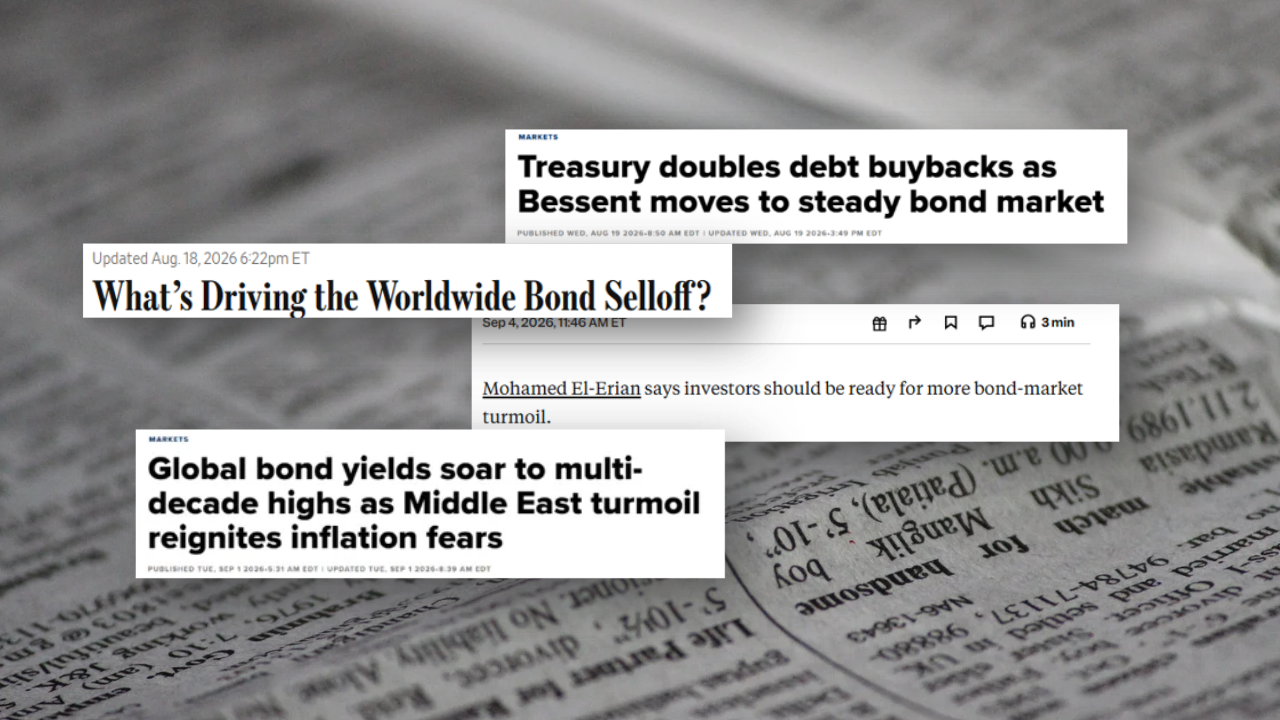
Many things are in the news! But the takeaway might be the exact opposite as it may seem from the headlines.
Selloff, turmoil, government intervention, yields soaring – this could lead investors to feel uneasy about their bond holdings and want to act. Everyone’s situation is different, so I am not suggesting a one-size-fits-all approach, but here are some facts and context to help us make some informed decisions rather than panic-selling from some scary headlines.
First off, let’s start with the fact that the U.S. Bond Index (Bloomberg U.S. Agg Bond TR) is down a whopping -0.31% through 8/31/26…sometimes context is important.
Secondly, let’s take a step back and remind ourselves why we own bonds in the first place…
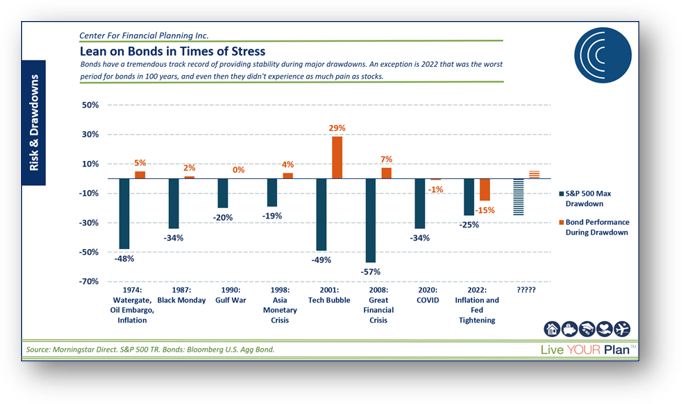
…historically, bonds can provide stability when needed. This holds true MOST of the time. Look at 7 of these 8 periods above. In the market’s hardest moments when stocks fell the most, bonds held their value or even provided positive performance.
The reason investors are paying extra close attention to bonds right now is because they failed us last time, and investors are worried they are going to fail us again. 2022 was a rare time in history when both stocks AND bonds fell at the same time. This happened because of a rare combination of very low starting yields and a VERY aggressive Fed tightening cycle to combat inflation coming out of the Covid era.
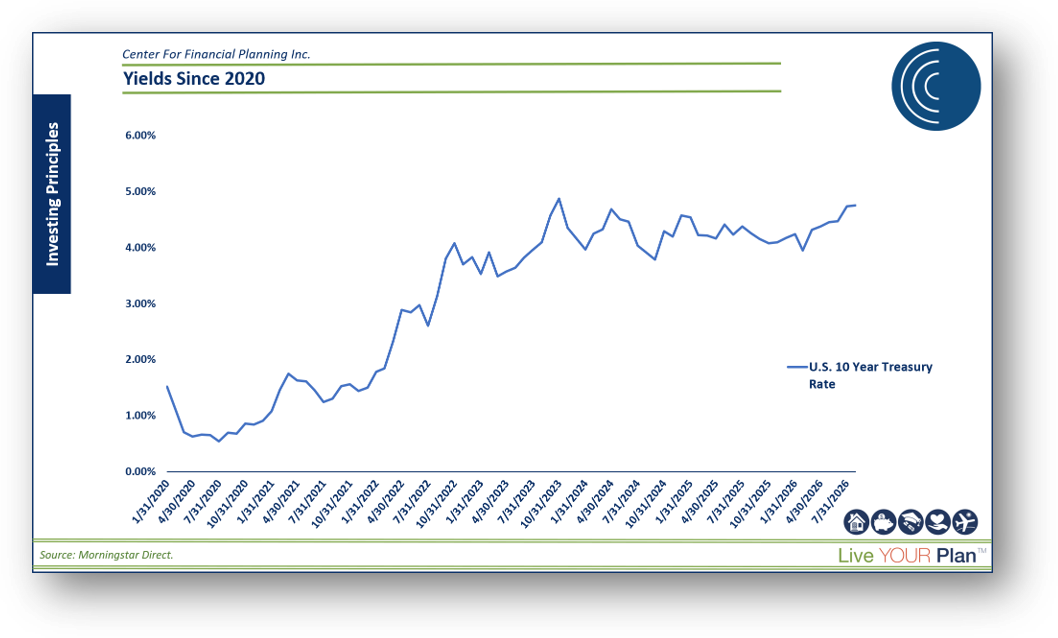
The important thing to remember is today is VERY different than 2022. In 2022, bonds were yielding near ~2%! Today, closer to 5%. Generally speaking, there is much more upside to yields (and downside to bond prices) when starting yields are so low.
How is this conflict with Iran going to end? Are tariffs here to stay? What is going to happen with U.S. tax revenue and government spending over the next 10 years? How is the A.I. productivity story going to play out? Where is the price of oil going from here? Does U.S. GDP grow at 0% or 5% in the coming years? Does inflation trend above 3% or come back down to the Fed’s 2% target? The uncomfortable truth is nobody knows what happens next. The future hasn’t been written yet. The comforting part is that this volatility and uncertainty is offering some compelling investment opportunities for investors to take advantage of.
The bond market is adjusting to all these variables on the fly, which is why it is demanding headlines. Rates could certainly move higher with negative news on any of those topics from above in the short-term, but for most of our clients we are not ONLY planning for the next 12 months. We are likely planning for the next 12 YEARS, and most of the time even further out than that.
Diversification remains a core investment belief for our firm, and every investor is different in their risk tolerance, time horizon, and goals – but bonds offering 4 to 5% on the short end of the yield curve and 5 to 6% on the long end of the yield curve can be a powerful tool in the toolkit when it comes to a retirement plan. Another thing to consider is that U.S. bonds are not the only bonds out there on the market that an investor can choose from. If you fear U.S. rates are going higher, but have a more positive outlook on rates elsewhere, there are many ways to express that view in your portfolio. Or if you want to truly explore other investment opportunities that could help guard against rising inflation, there are other asset classes to look into as well!
Above all else, a commitment to your financial plan is imperative. When we build a financial plan, we consider many different outcomes from bond volatility to market drawdowns to different paths for inflation going forward. Diversification and a commitment to the financial planning process help guide us to build resilient financial plans for many different market environments, and for now, we are here to help answer any questions about how these headlines might affect your portfolio and your financial plan today.
Nicholas Boguth, CFA®, CFP® is a Senior Portfolio Manager and Associate Financial Planner at Center for Financial Planning, Inc.® He performs investment research and assists with the management of client portfolios.
Opinions expressed are those of the author/speaker and are not necessarily those of Raymond James. All opinions are as of this date and are subject to change without notice. Investing involves risk and you may incur a profit or loss regardless of strategy selected, including diversification and asset allocation. Past performance may not be indicative of future results. Prior to making an investment decision, please consult with your financial advisor about your individual situation. Every investor’s situation is unique and you should consider your investment goals, risk tolerance and time horizon before making any investment. The forgoing is not a recommendation to buy or sell any individual security or any combination of securities. The indexes mentioned are unmanaged and cannot be invested into directly. Past performance is no guarantee of future results.