Educational Workshops

The Hidden Benefits of College Savings Plans – Webinar Recap

Contributed by: Brooke Wiley

Print Friendly and PDF

College planning often feels like a moving target. Rising costs, evolving tax rules, and questions about financial aid can make it difficult for families to know where to start. During our recent webinar, College Savings: The Hidden Benefits of College Savings Plans, Planner Bob Ingram CFP® sat down with John Scott of the Michigan Education Savings Program (MESP) to discuss how education savings plans have evolved and why they remain one of the most powerful tools available for families saving for future education expenses.

529 Plan Flexibility

A significant focus of the discussion was the flexibility of modern 529 plans. In addition to traditional qualified expenses such as tuition, books, computers, and room and board, families may now have options to use funds for apprenticeship programs, certain credentialing and certification programs, student loan repayment, and in some cases even Roth IRA rollovers for unused assets. With recent legislative updates to 529 plans, families have more pathways to utilize education savings in ways that support a student's academic and professional long-term goals.

Financial Aid

Financial aid was another topic highlight of the discussion. Many families worry that saving too much might negatively impact aid eligibility. While every situation is unique, 529 plans generally receive favorable treatment compared with other savings vehicles. Parent-owned 529 accounts, for example, typically have a limited impact on aid calculations.

Family Planning

The webinar also explored how education funding has increasingly become a multi-generational planning conversation. Grandparents, great-grandparents, and other family members often want to help support younger generations but may not know the most efficient way to do so. MESPs and other 529 plans can provide tax-advantaged gifting opportunities while allowing account owners to maintain control of the assets. For many families, this creates opportunities to support educational goals while also integrating broader estate and legacy planning objectives.

Start Early

A recurring theme throughout the presentation was the importance of planning early. While it may be tempting to delay saving when children are young, time can be one of the most powerful advantages available. Starting earlier allows contributions the opportunity to benefit from years of tax-advantaged growth and can reduce the pressure of trying to accumulate significant savings later.

 Learn More

If you missed the webinar, we invite you to watch the replay.

If you are interested in continuing the conversion around being intentional with education planning, stay tuned for our second webinar in this education planning series, College Planning Made Easy, on August 27th, 2026.

Prepare your student with great college planning

Brooke Wiley is an intern at Center for Financial Planning, Inc.® She is a student at Michigan State University majoring in finance and minoring in financial planning and wealth management.

529 plans come with fees and expenses, and there is a risk they may lose money or underperform. Most states offer their own 529 programs, which may provide benefits exclusively for their residents. Please consider whether the state plan offers any tax or other benefits. Tax implications can vary significantly from state to state.

Raymond James Elevate 2026: The Power of Personal

professionals attend a conference and learn from speakers

Mallory Hunt Contributed by: Mallory Hunt

Print Friendly and PDF

Several members of The Center team recently had the opportunity to attend Raymond James Elevate 2026 in fabulous Las Vegas. The flagship national conference brings together advisors and their teams from across the country each year around a unifying theme. This year’s theme: The Power of Personal. The conference reinforced what has long differentiated Raymond James in an increasingly digital and automated world—the belief that strong, personal relationships remain at the heart of successful financial advice.

Throughout the event, speakers emphasized that while technology, AI, and innovation continue to reshape the financial services landscape, they are most powerful when used to enhance, not replace, the personal connections advisors build with clients. Sessions focused on client‑first strategies, thoughtful growth and how advisors can authentically deliver customized advice rooted in trust, empathy and understanding. “AI will not replace you as an advisor; an advisor who utilizes AI will.”

We were especially proud to see our own Tim Wyman moderate the Town Hall panel alongside Raymond James’ leadership team including CEO Paul Shoukry, Private Client Group President Tash Elwyn, Independent Contractor Division President Kirk Bell and Financial Institutions Division President Steve Kruchten. This highly anticipated session gave advisors the opportunity to ask candid questions, raise challenges and engage in open dialogue with leadership about what matters most across the firm. Tim led the conversation with professionalism and energy—we couldn’t be prouder of the way he represented our team.

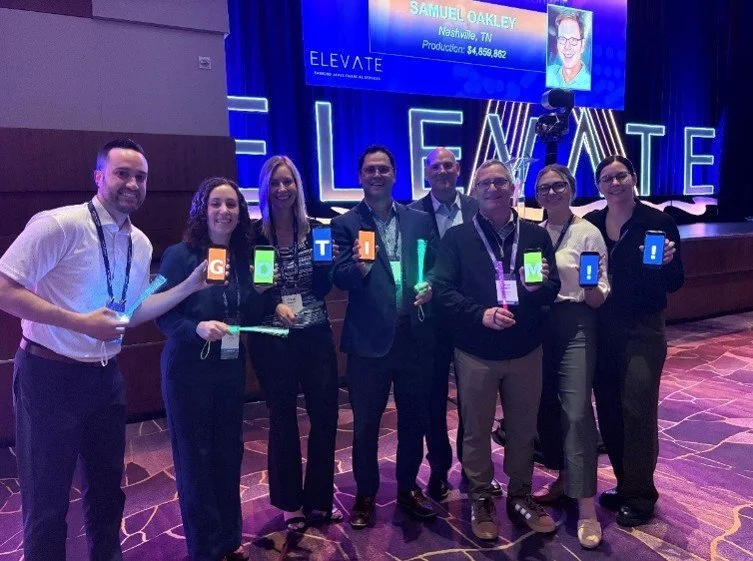
Center team celebrates Tim Wyman for hosting Raymond James' Elevate Conference panel.

Elevate 2026 also highlighted practical ways to leverage firm resources and shared best practices to aid advisors in staying deeply personal in their approach. The message was clear: success isn’t just about scale or efficiency; it’s about knowing each client’s story and helping them navigate life’s most important moments with confidence.

While Elevate is a professional conference, its impact extends directly to the clients we serve: YOU. Attending events like this allows us to explore new planning strategies & tools, stay current on industry trends & best practices, and continuously refine how we deliver advice & service. Most importantly, it strengthens our commitment to thoughtful, personalized financial guidance.

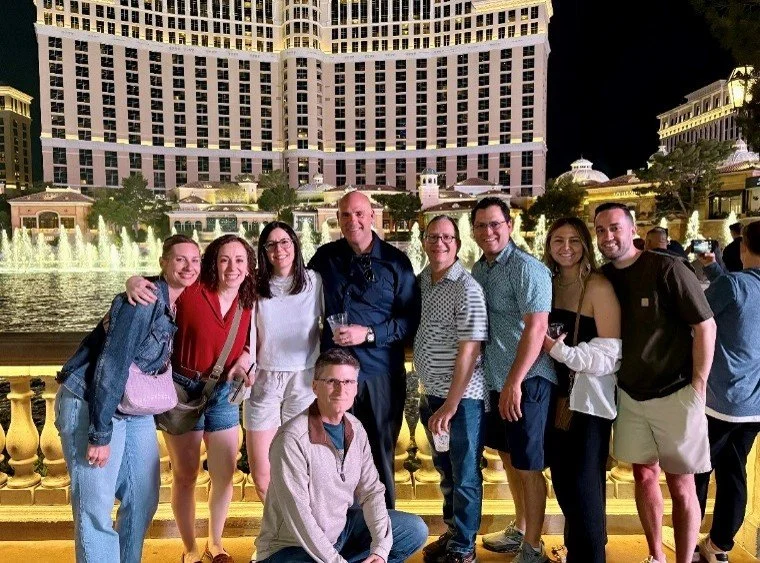
And of course, it wasn’t ALL business while we were in Las Vegas—we mixed in some fun, too! Our group made time for some team-building activities such as music trivia, karaoke and even an F1 Go Kart Racing experience. These shared experiences always help us recharge and strengthen the relationships that make our team so strong.

The Center Team attends Raymond James' Elevate Conference

While this conference always serves as a platform for continuing education, collaboration and innovation, we returned with valuable insight into how the financial landscape is evolving and with fresh ideas on how to deliver guidance and support to our clients. Ultimately, The Power of Personal served as both a reminder and a call to action, encouraging our team to lean into what makes our practice unique while reaffirming our commitment to building relationships, supporting financial independence and helping you Find Your Center.

The Center team attends 2026 Raymond James' Elevate Conference in Las Vegas

Mallory Hunt is a Portfolio Administrator at Center for Financial Planning, Inc.® She holds her Series 7, 63 and 65 Securities Licenses along with her Life, Accident & Health and Variable Annuities licenses.

Securities offered through Raymond James Financial Services, Inc., member FINRA/SIPC. Center for Financial Planning, Inc is not a registered broker/dealer and is independent of Raymond James Financial Services Investment advisory services are offered through Center for Financial Planning, Inc. The foregoing information has been obtained from sources considered to be reliable, but we do not guarantee that it is accurate or complete, it is not a statement of all available data necessary for making an investment decision, and it does not constitute a recommendation. The views expressed herein are those of Mallory Hunt and are not necessarily those of Raymond James.

Carepartners Passage Through Dementia

Sandy Adams Contributed by: Sandra Adams, CFP®

Print Friendly and PDF

More and more of our clients and families are being impacted by dementia. What is it and how does it impact those diagnosed and those who are caring for them? 

Dementia is a general term for a decline in mental ability severe enough to interfere with daily life. While it is believed there are over 50 different types of dementia, Alzheimer’s disease remains the most prevalent type, with an estimated 7.2 million people currently living with this specific type in 2025 according to the Alzheimer’s Association.

About 1 in 8 seniors has Alzheimer’s disease, and underdiagnosis remains a major issue. There are currently medications available to slow the progression of dementia, but there is no cure. 

Most individuals with dementia are being cared for by family caregivers. Having knowledge about the signs and progression of different types of dementia can be extremely helpful to both the person with the disease and the caregiver. Planning ahead to make sure that the appropriate legal and care plans are in place in advance can relieve a tremendous amount of stress from everyone involved. 

Realizing that the person with dementia is still the same person, just with a disease, is essential. 

Dr. Paula Duren shared with us the 5 Foundational Care Concepts for Caregivers of individuals with dementia: 

  1. Everyone has basic human needs 

  2. You are the one with the healthy brain 

  3. Be a good detective 

  4. They may not remember your words but they will remember your spirit/energy 

  5. Know that every behavior is an effort to communicate 

Dr. Duren of Universal Dementia Caregivers also teaches care strategies for caregivers about how to work effectively with those they are caring for. She also works with caregivers to care for themselves.  After all, if caregivers are not healthy and strong, they cannot care for their loved ones with dementia fully.  

Sandra Adams, CFP®, is a Partner and CERTIFIED FINANCIAL PLANNER™ professional at Center for Financial Planning, Inc.® and holds a CeFT™ designation. She specializes in Elder Care Financial Planning and serves as a trusted source for national publications, including The Wall Street Journal, Research Magazine, and Journal of Financial Planning.

This information has been obtained from sources deemed to be reliable, but its accuracy and completeness cannot be guaranteed. Raymond James is not affiliated with Dr. Paula Duren.

Webinar in Review: Carepartners Passage Through Dementia

Contributed by: Sandra Adams, CFP® Sandy Adams

More and more of our clients and families are being impacted by dementia.  What is it and how does it impact those diagnosed and those who are caring for them?

Dementia is a general term for a decline in mental ability severe enough to interfere with daily life. While it is believed there are over 50 different types of dementia, Alzheimer’s disease is the most prevalent type, with more than 5 million people currently living with this specific type.  1 in 9 seniors has Alzheimer’s disease, but half don’t know it.  There are currently medications available to slow the progression of dementia, but there is no cure.

Most individuals with dementia are being cared for by family caregivers.  Having knowledge about the signs and progression of different types of dementia can be extremely helpful to both the person with the disease and the caregiver.  Planning ahead to make sure that the appropriate legal and care plans are in place in advance can relieve a tremendous amount of stress from everyone involved.

Realizing that the person with dementia is still the same person, just with a disease, is essential.

Dr. Paula Duren shared with us the 5 Foundational Care Concepts for Caregivers of individuals with dementia:

  1. Everyone has basic human needs

  2. You are the one with the healthy brain

  3. Be a good detective

  4. They may not remember your words but they will remember your spirit/energy

  5. Know that every behavior is an effort to communicate

Dr. Duren of Universal Dementia Caregivers also teaches care strategies for caregivers about how to work effectively with those they are caring for.  She also works with caregivers to care for themselves.  After all, if caregivers are not healthy and strong, they cannot care for their loved ones with dementia fully. 

Listen to the replay of our webinar “Carepartners Passage Through Dementia” for additional tips and information AND watch for information about our May workshop for caregivers being facilitated by Dr. Duren.

Sandra Adams, CFP® is a Partner and Financial Planner at Center for Financial Planning, Inc.® Sandy specializes in Elder Care Financial Planning and is a frequent speaker on related topics. In addition to her frequent contributions to Money Centered, she is regularly quoted in national media publications such as The Wall Street Journal, Research Magazine and Journal of Financial Planning.

This information has been obtained from sources deemed to be reliable but its accuracy and completeness cannot be guaranteed. Raymond James is not affiliated with Dr. Paula Duren.

Tax Free Growth: A Webinar Targeting Fiat Chrysler Retirement Plans

Contributed by: Center for Financial Planning, Inc. The Center

20151022.jpg

A couple of weeks ago, Nick Defenthaler, CFP®, hosted a webinar targeting Fiat Chrysler employees and how they could save thousands of dollars by contributing to the after-tax portion of their 401k plan. Although not all 401k retirement plans have these same capabilities, knowing about the possible tax deferred options that could be available for your retirement plan can be helpful for future saving.

In the webinar below, Nick explains the difference between traditional 401ks and Roth 401ks, and also includes insight into other retirement saving vehicles like IRAs. He explains what retirement plan could be best for you and your future, which can depend on your current tax bracket and your predicted future bracket. The webinar is filled with basic information about retirement plans and then delves into the specific plan as it relates to Fiat Chrysler employees. Take 30 minutes to review the information and if you have any questions, feel free to contact us.

For further information, Nick has already shared advice for thinking about Back Door Roth IRA Conversion and what Ford Employees should do regarding this same topic.

How Millennials Approach Financial Planning

Contributed by: Nick Defenthaler, CFP® Nick Defenthaler

Last month, I visited Dallas, Texas for a unique “conference” – the Financial Planning Association (FPA) NexGen Gathering.  FPA NexGen is exclusive to those who are under the age of 37 and active in the financial planning profession.  As a board member for the FPA of Michigan, I learned about the NexGen group several months ago and was intrigued and very excited that there was a dedicated group connecting and sharing information among younger planners.   

Millennials Don’t Want “Conferences”

From the very moment I arrived, I could feel the positive energy.  As the “gathering” began (apparently calling it a “conference” was too stuffy for us Millennials), everyone gave a brief introduction, said where they had come from and one thing they hoped to come away with by the end of the weekend.  Even with a group of 108, you could truly feel the passion each person had for helping others with money.  For the next hour or so, we developed and voted on several lists of discussion topics that would be the focus of breakout sessions the following day.  No speakers.  No single voice preaching their view on a particular topic.  These were CONVERSATIONS between professionals with an open, casual, yet extremely respectful format. 

Starting Conversations & Building Relationships

The following day there were 6 breakout sessions, each with 4 topics to choose from to attend the round table discussions.  It was so difficult to just pick one because so many great ideas came out of the previous day’s brainstorming session. I came away with several great ideas to immediately put into practice both professionally and personally, which in my opinion, is what attending “conferences” and participating in professional development opportunities is all about.  I’ve also found that the relationships you develop while away from home at events such as the NexGen Gathering with like-minded peers does nothing but help you progress and become a better planner and professional.  It’s amazing what you can learn from others if you keep your mind open and challenge the way you normally think. 

Overall, the NexGen gathering was a great experience and I truly enjoyed spending time with the current and future leaders in the financial planning profession. I can tell you, they truly love what they do each and every day – helping others live great lives.  I look forward to attending the Gathering again next year and coming away with a new sense of energy like I have this year!

Nick Defenthaler, CFP® is a CERTIFIED FINANCIAL PLANNER™ at Center for Financial Planning, Inc. Nick is a member of The Center’s financial planning department and also works closely with Center clients. In addition, Nick is a frequent contributor to the firm’s blogs.


Any opinions are those of Nick Defenthaler, CFP® and not necessarily those of RJFS or Raymond James. Raymond James is not affiliated with and does not endorse the opinions or services of the Financial Planning Association (FPA). Links are being provided for information purposes only. Raymond James is not affiliated with and does not endorse, authorize or sponsor any of the listed websites or their respective sponsors. Raymond James is not responsible for the content of any website or the collection or use of information regarding any website's users and/or members.

The Art and Science of Happiness

Contributed by: Angela Palacios, CFP® Angela Palacios

In 1988 Bobby McFerrin inspired us to “Don’t Worry Be Happy.” As I’m sure many agree, this is far easier said than done.  During the Raymond James National Conference I had the privilege to attend a session on happiness taught by Dr. Fred Luskin from Stanford University.  This session was a very abbreviated, but no less inspiring, version of his popular course offered at Stanford University.  We can all use a little more happiness in life even if we aren’t unhappy and Dr. Luskin offers some tools to help us do so.

Manage your drive to achieve

“Happiness is wanting what you have” said Dr. Luskin.

Don’t waste all of your time pining for more or something different than you already have. You can strive for more, but take time to appreciate what you do have.

Savor moments of success and love

Too often we ruin these moments by immediately picking up our phone to check email or text messages. Stop and just enjoy the moment briefly before moving on to the next item on the list.

Take time to show gratitude

Think about what you are grateful for and share that with someone.   We don’t have to wait until it is November to post these things on Facebook or share with someone; try to do this every day.

Give your brain the opportunity to see the happiness

Mediate, take breaks and relax.  It is ok to have a lot to do. “In every life we have some trouble, When you worry you make it double.”  Train yourself to just be ok with having a lot to do and temper your drive to get it all done at once.

Dr. Luskin teaches us not to focus on what has gone wrong, but instead what makes people happy and why.  So while we all can’t attend a class at Stanford, an easy first step is try generating your own list of activities and experiences that rejuvenate you and keep it handy to help you manage your daily stress.  This small step can go a long way in increasing our mood, health, productivity and overall happiness.

Angela Palacios, CFP® is the Portfolio Manager at Center for Financial Planning, Inc. Angela specializes in Investment and Macro economic research. She is a frequent contributor to Money Centered as well asinvestment updates at The Center.


Raymond James is not affiliated with Dr. Fred Luskin

Center Team Back from RJ Conference with Ideas for the Future

Though the sun was shining brightly over the pool outside our Las Vegas hotel, our team turned a blind eye each morning and dove into work. Of The Center’s 18 employees, 17 of us made the trip to the Raymond James National Conference for Professional Development. We make it a point every year to get as many hands on deck as possible. Not just for the learning opportunities, but because it’s a great chance for us to do some off-site team building. This year we went with a mission: Find take-aways we could put into action for our clients. In this video, we share just a few:

4 Reasons Putnam Investments is back in the Winner’s Circle

Contributed by: Jaclyn Jackson Jaclyn Jackson

During the first quarter of 2015, I had the pleasure of attending Putnam Investment’s Research Analyst Meeting.  Even though a giant snowstorm hit the area just days before, positive energy seemed to be bursting at the seams in Boston. Admittedly, the Patriots had just won the Super Bowl and the victory parade was the day before the conference started, but the positive feeling at Putnam Investments came from something else.  It came from a proud shift in company culture that helped propel the firm back into its rightful spot in the winner’s circle of investment companies.

Putnam’s Fall & Rise

Having had their reputation shattered in 2003 after Securities and Exchange Commission market timing and late trading investigation, Putnam’s net asset level plummeted dramatically through 2008.  Fighting to stop the bleeding, Putnam decided to completely revamp.  On the first day of the conference, I had a chance to listen to R. Jeffrey Orr (President and CEO of Power Financial Corporation) and Robert Reynolds (President and CEO of Putnam) discuss how they turned the company’s culture on its head.  I remember R. Jeffrey Orr saying that when he first came to Putnam, there was a “playing not to lose” attitude and his goal became to shift that to a “playing to win” attitude. 

The Changing Culture at Putnam

I was most impressed by the analysts’ panel.  In line with the changes Orr and Reynolds set out to accomplish, the analysts talked about how Putnam’s research culture evolved to become more entrepreneurial and team based.  These fundamental changes have improved fund performance and subsequently brought Putnam back to life.  Many factors helped make that change happen, but here are what I see as the top four reasons Putnam is back in the winner’s circle:

  1. Shared Research: In the old company culture, credit analysts and equity analysts never crossed the aisle to work with each other.  Now, it is common for credit and equity analysts to combine research (as credit research often captures a perspective that differs from equity research performed on the same company and vice versa) to make better assessments of a company.
  2. Personal Accountability: Each analyst constructs his/her own individual portfolio and is rewarded based on how well his/her portfolio performs.  In this way, analysts are acknowledged for all the good calls they make and not just the calls they make that the portfolio manager adapts to the fund portfolio.  This encourages good ideas, individual thinking, high conviction, and entrepreneurship. 
  3. Different Compensation Structure: Putnam’s compensation structure differs from other companies in that, typically, analysts fight over a lump sum amount intended to be split among them. The traditional structure often pits researchers against each other; even if more than one person has a good year, only the best researcher is compensated.  Putnam’s structure allows everyone to be compensated for the choices they make in their individual portfolios; essentially, everyone can be rewarded when they make positive attributions.  Culturally, the compensation structure helps thought sharing and helps build comradery (provided analysts are no longer motivated to hoard good ideas).
  4. Efficient Communication: Communication has improved between portfolio managers, analysts, and traders.  To start, everyone is centrally located - meaning you can physically see when someone is at their desk and consult with them as needed.  This informal meeting style has helped Putnam eradicate the long, formal meetings they once had.  Check-ins are shorter, but more frequent and have generated more time for everyone to fulfill their job responsibilities.

This material is being provided for information purposes only and is not a complete description, nor is it a recommendation. Any opinions are those of Jaclyn Jackson and not necessarily those of Raymond James. The information has been obtained from sources considered to be reliable, but Raymond James does not guarantee that the foregoing material is accurate or complete. Links are being provided for information purposes only. Raymond James is not affiliated with and does not endorse, authorize or sponsor any of the listed websites or their respective sponsors. Raymond James is not responsible for the content of any website or the collection or use of information regarding any website's users and/or members.

Possibilities Conference Offers Insights on Aging

Contributed by: Melissa Parkins Melissa Parkins

I recently attended the Branch Possibilities Conference at the Raymond James home office in St. Petersburg, Florida. The theme this year was "Working with Aging Clients". I had high hopes of receiving quality information that I could bring back to our office, like many others have been able to do in past years. My time there exceeded my expectations. Not only did I have a great time away from the office (and in some warm and humid weather!), I met a lot of interesting and intelligent people, got to collaborate with other RJ associates and learned more than I expected to about opportunities at Raymond James, including new technology, that we hope to share with clients in coming months.

My top takeaways:

  • I heard a lot about the work RJ has been doing regarding future quality of life. Their research was used by many different presenters at the conference. One of the main themes revisited throughout the entire conference was the three questions that can be used to predict future quality of life: Who will change my light bulbs? How will I get an ice cream cone? Who will I have lunch with? For more on how the answers to these questions can provide valuable insight on housing and quality of life issues, take a look at this blog by Sandy Adams, CFP®. These are three simple and innovative questions that clients, families and planners should be discussing to assess preparedness for long life in retirement.
  • The value of debt, especially for an aging client, was another hot topic. I learned of the new lending options available for all clients based on securities through Raymond James bank (lines of credit, mortgages, etc.).  These new lending opportunities open up planning options for clients of all ages that weren’t present in the past.  We look forward to conversations with clients about these opportunities during meetings in the coming months.
  • Social Security continues to be a hot topic as it relates to retirement income strategies.  We talk a lot about this with clients as they prepare for retirement.  The presentations at the conference connected a lot of dots for me personally, and we look forward to continuing to put Social Security strategies to work for our clients in the context of their lifelong retirement income planning.

This material is being provided for information purposes only and is not a complete description, nor is it a recommendation. Any opinions are those of Melissa Parkins, Registered Client Service Associate and not necessarily those of Raymond James. The information has been obtained from sources considered to be reliable, but Raymond James does not guarantee that the foregoing material is accurate or complete.