

Checkout our current blog posts HERE. See you there!
Pre-Paid Funeral Plans

 Historically, end-of-life issues, especially death and funerals, were the last topics people wanted to discuss. With more information and resources available, it seems that Americans are more at ease having these conversations. And they are willing to plan for these events in advance!
Recently, I had a client ask me about pre-paid funeral/cremation plans and whether these were something she should consider. In doing some research on the topic, I found that there can be pros and cons to these types of plans:
Pros:
- Prepaying for your funeral can ease the burden on already grieving family members when the time comes, and you are able to choose the options you want.
- Using a prepaid plan can provide peace of mind. If you choose the right method and plan, you can feel confident that there are funds available to pay your final expenses.
- A prepaid funeral plan is a non-countable asset if you need government assistance for long-term care expenses down the line (Medicaid or VA Aid & Attendance Benefits).
Cons:
- Purchasing a pre-paid funeral plan directly with a funeral home can be risky. If the funeral home goes out of business or misappropriates the funds, you could be out the money invested.
- You must carefully read any contract to ensure that there will not be added costs later on (i.e. the casket that was chosen is no longer available and the replacement model is much more costly).
- If you purchase a plan with a specific funeral home, you may not have the flexibility you want/need later on if you need to relocate and wish to change funeral plans.
There are pre-paid funeral insurance plans sold by insurance companies that provide the flexibility of using any funeral home in any state. The policies ensure that the premium you pay will cover the costs you plan for when the time comes. Again, it is important to read the fine print and consider the costs for any type of pre-paid funeral plan. Additional information and FAQs can be found in the Federal Trade Commission’s publication “Funerals: A Consumer Guide”.
There are many ways outside of the pre-paid funeral plans to ensure that your plans are in place and that the funds are available. Discuss these and other important issues with your financial planner.
The information contained in this report does not purport to be a complete description of the securities, markets, or developments referred to in this material. Any information is not a complete summary or statement of all available data necessary for making an investment decision and does don constitute a recommendation. Any opinions are those of Center for Financial Planning, Inc., and not necessarily those of RJFS or Raymond James.
Betsey Schrock Elected President of Stagecrafters in Royal Oak

 The Center is pleased to announce that Betsey Schrock, Office Manager/Bookkeeper, has recently been elected president of Stagecrafters, a large community theatre organization located at the Baldwin theatre in Royal Oak. Stagecrafters recently celebrated 50 years of providing quality performances to children and adults in the southeast Michigan region. Each year, Stagecrafters presents five productions on its 372-seat Main Stage and three contemporary productions on its more intimate 100-seat 2nd Stage. Stagecrafters is unique among community theatre groups because it owns the building where it performs and where, later this year, the Baldwin is expected to be awarded Michigan Historic Building status.
Betsey joined Stagecrafters in 1996 after being involved as the wife of an actor and the mother of two budding theatre aficionados. She began her involvement as producer for several Stagecrafters Youththeatre productions (SYT). From there, Betsey also experienced producing on the Main Stage and more recently the 2nd Stage. Other experiences include manning the box office, ushering, house managing, and working on such committees as human resource, membership, production, and budget.
Betsey is most proud of the SYT which presents two productions per year. SYT is theatre for youth and by youth. Children ages 8 – 18 can join SYT for a small fee and can be involved in a production, from acting, to set building, to painting, ushering, and even producing or directing, all of which are supervised by caring and experienced adult members of Stagecrafters. Some of our youth have gone on to professional acting, including the popular Kristen Bell! More importantly, the youth have the opportunity to work with adults and feel comfortable around adults who are valuable role models. Whether on-stage or backstage, one can see how involvement at Stagecrafters helps youth develop their interests and their confidence, which are useful later on in life.
Betsey’s term as president is two years. During these two years, she plans to help Stagecrafters celebrate SYT’s 40th year and to seeing to fruition a multi-year campaign to fund and renovate the theatre’s restrooms.
"There’s always something we can do to make Stagecrafters even better." Betsey
Around the Water Cooler at The Center

 We find ourselves in the middle of summer again and more than half way through the year. Here at The Center, this is the time of year when we are digging into the most intense research and doing some very “deep thinking”. A heavy dose of conferences and speakers in the spring gave us much food for thought, and now we find ourselves at a time in the year where the schedule seems a bit lighter, no doubt due to our clients out enjoying their well-deserved summer vacations. So, while you may be thinking about relaxing, here’s what we’re thinking about at The Center:
- Around the world, government intervention has caused interest rates to fall due to slowing growth in China and Euro Crisis. Can they go even lower?
-
A surprising slowdown in overall US debt growth has been occurring under our noses. No, the US federal debt load keeps growing, but there has been measurable deleveraging on the state and household levels.
-
The Affordable Care Act was largely upheld by the Supreme Court last month having implications for Americans and their investment and tax strategy in all walks of life.
-
Scandalous headlines are resurfacing at big banks, most recently JP Morgan and Barclays
This is more than water cooler talk for us, we are busy working these landmark changes into our strategies for the future. To find out more about what’s catching our attention, check out our Quarterly Investment Commentary.
Tim Wyman Offers Pension Buyout Insight to WDIV Channel 4 Viewers
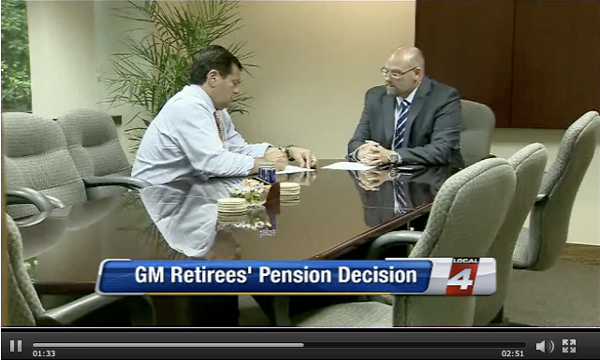
WDIV Channel 4 sits down with The Center's Timothy Wyman, CFP, JD to talk about tough pension choices General Motors retirees face. Watch the video and read more here.
Need help making good financial decisions?

 You are not alone. There are few people who should even attempt charting their financial course without consulting someone else. Even experts ask others for advice! So, I offer 7 key components to helping you find the right person to help you make the best decisions possible for you:
- Experience: Reflecting back on my career, I am always amazed at how green we are in the first 10 years of our careers. I would recommend that you seek an advisor with a minimum of 10 years of on-the-job work experience before handing over the keys to your largest financial decisions. Make sure that the work experience is hands-on and specific to your needs. Ask them about their experimental practice history. What was their greatest mistake or great new awareness surrounding the people they help?
- Qualifications: Make sure the financial professional is a CFP® practitioner, a Certified Public Accountant-Personal Financial Specialist (CPA-PFS), or a Chartered Financial Consultant (ChFC).
- Services: Ideally, the first meeting is free so you can see if the relationship is a good fit. At the first meeting, spend time trying to understand if your values are aligned and if the financial planning professional really cares about you and your goals. Ask for a list of services the financial planner offers or the scope of the engagement options. This should define the scope of work and the costs. Ask the planner to provide you with a written agreement that details the services that will be provided. Keep this document in your files for future reference.
- How their firm works: The financial planner may work with you or have others in the office assist. You may want to meet everyone who will be working with you. If the planner works with professionals outside his/her own practice (such as attorneys, insurance agents or tax specialists) to develop or carry out financial planning recommendations, get a list of their names to check on them all out.
- Compensation: As part of your financial planning agreement, the financial planner should clearly tell you in writing how he/she will be paid for the services to be provided. Planners can be paid in several ways (i.e. Commissions, fees, or a combination).
- Other costs: While the amount you pay the planner will depend on your particular needs, the financial planner should be able to provide you with an estimate of possible costs based on the work to be performed. Such costs should include the planner’s hourly rates or fees or the percentage he would receive as commission on products you may purchase as part of the financial planning recommendations.
- Complaint history: Ask what organizations the planner is regulated by and contact these groups to conduct a background check. All financial planners who have registered as investment advisers with the Securities and Exchange Commission or state securities agencies. Or, if they are associated with a company that is registered as an investment adviser, they must be able to provide you with a disclosure form called Form ADV Part II or the state equivalent of that form.
The information contained in this report does not purport to be a complete description of the securities, markets, or developments referred to in this material. The information has been obtained from sources considered to be reliable, but we do not guarantee that the foregoing material is accurate or complete. Any opinions are those of Center for Financial Planning, Inc., and not necessarily those of RJFS or Raymond James.
Angela Palacios & Melissa Joy attend Morningstar Investment Conference


Our Investment Department capped off a busy investment research spring by attending the Morningstar Investment Conference in Chicago this June. The annual conference features portfolio managers, thought leaders in the investment profession, and academics on timely topics.
“This is always a highlight of the year for the investment department. We see more portfolio managers and friends in our business than at any other time,” said Melissa Joy. “I especially enjoy the conference because it is exclusively focused on investing so you have three days to think deeply about the investment landscape today.”
Highlights this year included a variety of opinions on the EuroZone, discussions on the impacts of trading costs to portfolios, and one-on-one discussions with portfolio managers. The Center has been at the conference for each of the last 10 years.
Angela Palacios attended a pre-conference training on our new investment research software, Morningstar Direct. This upgrades our investment research capabilities going from a database of only the US public investment universe to an institutional investment platform that offers global investment research with rigorous analytics.
Angela said “It was a great opportunity to attend a training and user conference for our new software. I’m confident the software will streamline our research process and give us more accurate and in-depth knowledge to make investment decisions.” She was able to hear from Senior Research Analysts and Economists with Morningstar and also speak with other firms with a dedication to investment research.
The information contained in this report does not purport to be a complete description of the securities, markets, or developments referred to in this material. Any opinions are those of Melissa Joy and Angela Palacios and not necessarily those of RJFS or Raymond James
We're Sorry, This Page is No Longer Available
Checkout our current blog posts HERE.
The Perfect Recipe for a Balanced Life for the Sandwich Generation

 I think I’m like many Americans that struggle to find personal time amongst the chaos of working full time, raising two children, balancing family relationships, and other obligations (school, church, volunteer work, etc.). And I am not even one of the many Americans between the ages of 40 and 60 who are raising children AND assisting aging parents. If I have trouble finding time to balance my life with only one family to raise, how can these members of the “Sandwich Generation” do it?
I had a client of mine explain it this way, “You have to run your family like a business, that’s the bottom line.” While there are certainly feelings and emotions that complicate the dynamics of these family situations, there has to be a way to get things done without sacrificing all of your time, your relationships, or your sanity.
Here are 3 ways to managing your multi-tiered family like a business:
- Plan Strategically – The key here is to have a plan; to be proactive rather than reactive. Know what has to be done, when it needs to be done, and how it will be paid for. This includes creating master calendars for who needs to be where and arranging transportation).
- Manage Resources – Make sure you have the tools in place to make things happen (legal documents, financial resources, and human resources). If you don’t have the pieces in place to make things happen when the time comes, you end up in crisis mode. This involves making sure legal documents like durable powers of attorney are in place and arranging for help that is either paid or volunteer for things like care assistance, bill paying, etc.
- Departmentalize – You are the manager of the family business, which means you oversee but do not need to perform every task. Make sure that the right people are handling the right tasks, and that everyone is doing their part. This means involving all family members to do their share (including adult siblings) and hiring the right professionals to handle the duties that are outside your area of expertise (Geriatric Care Managers, Elder Law Attorneys, Financial Planners, etc.).
Before trying to handle every duty that comes managing a multi-tiered family, consider viewing your family like a business. Doing so will ensure that everyone is served best, and will provide you time to maintain a balanced and quality life.
Please feel free to contact me for additional tips on establishing and managing your family business.
The information contained in this report does not purport to be a complete description of the securities, markets, or developments referred to in this material. The information has been obtained from sources considered to be reliable, but we do not guarantee that the foregoing material is accurate or complete. Any opinions are those of Center for Financial Planning, Inc., and not necessarily those of RJFS or Raymond James.
Investment Commentary - 3rd Quarter 2012
Stock returns as measured by the S&P 500 were in the hole for the quarter coming into June. They rallied somewhat for the month so that those invested accordingly had the potential to recover some. This time of year also marks some of our most intense research activities including the Morningstar Investment Conference. I summed up our thoughts on portfolio positioning and the Eurozone in a special June update so I'd like to discuss some new trends and themes today.
A laundry list of news items are catching our attention today. They converge to create a growing tally of changes at the margin which may have investment implications for you.
-
We've sent you several communications about the changes to General Motors and Ford pensions. Even if you are not directly impacted, there may see similar changes if you have a defined benefit plan. Analysts believe that this is the start of a new wave of offloading pension obligations and that more announcements from other companies may follow. Our experiences show that the decisions to take a pension or lump-sum buyouts is largely personal and complex based upon your overall financial situation.
- Around the world, interest rates have been falling as slowing growth in China and EuroCrisis have been answered by government intervention. This may be one of the reasons that the MSCI EAFE is flat on the year in spite of dire headlines overseas. While interest rates would be challenged to go lower in the US, there is some room for government intervention around the world, especially in emerging markets -- think of Brazil as an example.
-
A surprising slowdown in overall US debt growth has been occurring under our nose. No, the US federal debt load keeps growing, but there has been measurable deleveraging on the state and household levels. Some of this has come through the painful process of personal bankruptcy and foreclosures. States and municipalities have been practicing their own austerity with layoffs and less borrowing.
- The Affordable Care Act was largely upheld by the Supreme Court last month. This will have implications for Americans of all walks of life. For some of you some of the implications will be investment-related due to the 3.8% surtax on investment income in higher earnings brackets. This increase on investment income may not be the end given the pending expiration of "Bush" tax cuts. The coordination between tax strategy and investment management will become more and more critical in coming years.
-
Scandalous headlines resurfaced at big banks, most recently JP Morgan and Barclays. JPM disclosed that it had major losses due to poor risk controls in exotic trades. The Barclay's LIBOR scandal is in its early days and may be much larger than it appears on the surface. Essentially, Barclay's has admitted that it fudged reports of borrowing costs over the last five years. Many Americans may have been negatively impacted since adjustable loans linked to LIBOR are widespread for mortgages, student loans, and car loans.
We live in a heavily regulated financial world. I know this as much as anyone as each of these messages to you is reviewed in-depth by a compliance department prior to publishing. If I had my druthers, my day would involve less red tape and easier direct communication with you. The continued misbehavior of corporations and individuals alike seems to justify at least some of this burdensome regulation.
As the election season heats up, Angie Palacios, CFP®, Portfolio Coordinator, has focused her MoneyCentered blog posts on politics and investing. Click here to read the series.
Speaking of politics, I recently heard Columbia University Professor of History Eric Foner in an interview discussing Abraham Lincoln's presidency and leadership strengths. He mentioned that one of Lincoln’s strongest character traits was the ability to change his mind on critical issues. “Lincoln was a flip-flopper, if you want to use the terminology of modern politics.” While a politician today is accused of something close to political treason each time they tweak or change their mind, I value the ability to keep an open mind as an investor.
We think long and hard about what would be best for you as our clients and what worked yesterday may not always work tomorrow. We take the changing investment landscape into consideration as we make investment decisions while we will stick with our process which encourages us to analyze and evaluate risks and opportunities for you. Perhaps if our elected officials were afforded the same flexibility there would be more compromise and less frustration with our nation’s capital.
I always enjoy hearing from those of you who are reading these investment updates. Don't hesitate to let me know if you have any questions, comments, or suggestions for future topics.
On behalf of everyone here at The Center,
Melissa Joy, CFP®
Partner, Director of Investments
Investment Advisor Representative, RJFS
The information contained in this report does not purport to be a complete description of the securities, markets, or developments referred to in this material. The information has been obtained from sources considered to be reliable, but we do not guarantee that the foregoing material is accurate or complete. Any opinions are those of Melissa Joy, CFP® and not necessarily those of RJFS or Raymond James. Links are being provided for information purposes only. Raymond James is not affiliated with and does not endorse, authorize or sponsor any of the listed websites or their respective sponsors. Raymond James is not responsible for the content of any website or the collection or use of information regarding any website's users.